Serving homeowners across Georgia
Georgia Crawl Space Encapsulation & Moisture Control
Wet ground, humid air and torn plastic under the house are a Georgia problem, not a coincidence. We inspect the crawl space, identify where the moisture is coming from, and seal it properly — vapor barrier, drainage, dehumidification and repairs in the right order.
Encapsulation · Vapor barriers · Drainage · Dehumidifiers · Crawl space & basement waterproofing
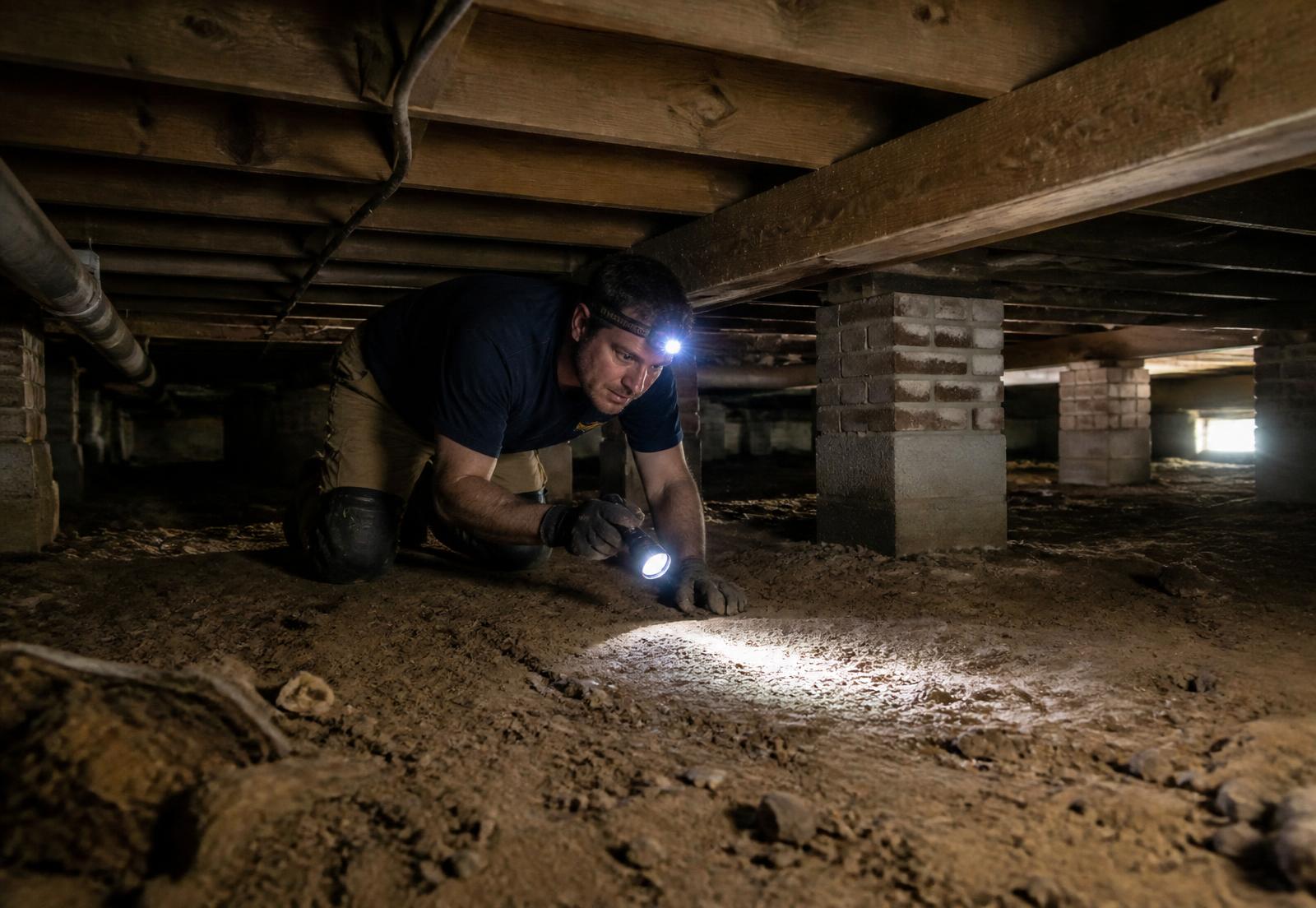
Start here
What are you seeing under your house?
Water under the house
Puddles or damp soil, usually worst after heavy rain.
See what causes it →Standing water that won't drain
Water sitting for days, sometimes with a sour smell.
See what causes it →High humidity
Sticky floors, condensation on ducts, swollen doors upstairs.
See what causes it →Musty odor in the house
An earthy smell strongest near floor vents and closets.
See what causes it →Damaged vapor barrier
Torn, bunched or missing plastic over bare soil.
See what causes it →Not sure yet
Describe what you noticed and we'll take a look.
See what causes it →What we do
Crawl space solutions matched to the actual moisture source
Crawl Space Encapsulation
Sealed liner across the ground and up the foundation walls, sealed vents and a controlled humidity level.
Read more →Crawl Space Waterproofing
Stopping liquid water at the entry point with grading, exterior corrections and interior drainage.
Read more →Vapor Barrier Installation
Heavy reinforced moisture barrier over bare soil, lapped and taped instead of loose sheeting.
Read more →Drainage & Sump Systems
Perimeter drainage and a sump where groundwater or runoff genuinely enters the crawl space.
Read more →Crawl Space Dehumidifiers
Sized dehumidification with a drain line, for sealed crawl spaces that still hold humidity.
Read more →Crawl Space Repair
Support posts, girder and joist repairs, subfloor and access door work after moisture damage.
Read more →Crawl Space Insulation
Removing sagging wet fiberglass and insulating the sealed envelope so it stays dry.
Read more →Moisture & Mold Conditions
Damp wood, condensation and surface growth — what causes it and how the environment gets corrected.
Read more →Basement Waterproofing
Interior drainage, wall treatment and sump systems for Georgia homes with basements.
Read more →The encapsulation sequence
How a sealed crawl space actually gets built
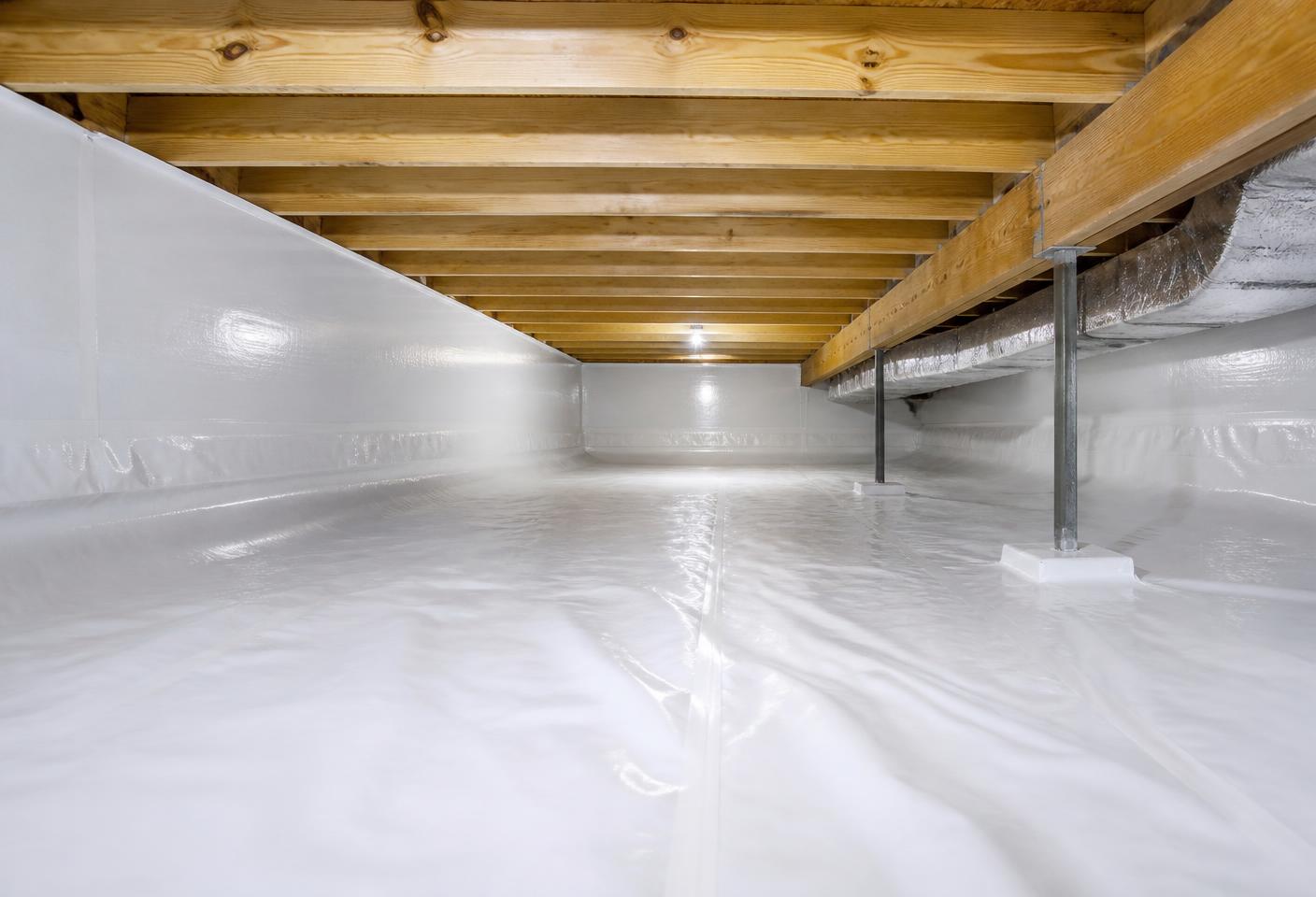
- 01Clear and dry the spaceOld plastic, wet insulation and debris come out so the ground and framing can be seen and treated.
- 02Handle water firstGrading, downspouts, drainage or a sump — whatever is needed so liquid water isn't trapped under a new liner.
- 03Seal the ground and wallsReinforced liner across the soil, lapped seams taped, then run up and mechanically fastened to the foundation walls.
- 04Close the envelopeVents, the access door and rim penetrations get sealed so outdoor humidity stops washing through.
- 05Control the humidityA sized dehumidifier with a routed condensate line keeps the sealed space in a stable range year-round.
- 06Document the resultPhotos of the finished work and the humidity target, so you know what was installed and what to watch.
Have water under your home?
Water that returns after every storm doesn't stop on its own. An inspection tells you whether this is a drainage job or a full encapsulation.
Why it happens here
Why Georgia crawl spaces develop moisture problems
Georgia gives crawl spaces a hard time for three reasons that stack on top of each other. Summer air carries a high dew point for months, so any air moving through a foundation vent arrives loaded with moisture. Much of the state sits on tight red clay that drains slowly and holds water against footings after a storm. And a large share of the housing stock was built with vented crawl spaces and thin plastic laid loosely over bare soil.
The result is predictable: warm humid air meets cooler framing and duct surfaces, condensation forms, damp wood stays damp, and the smell moves upward into the living space along with the air. Add a downspout dumping next to the foundation and the same crawl space now has liquid water on top of the humidity problem.
- Long humid season with sustained high dew points
- Clay soils that shed water slowly and stay saturated
- Vented crawl spaces that invite outdoor moisture in
- Loose or missing vapor barrier over exposed soil
- Roof runoff and grading that push water toward the house
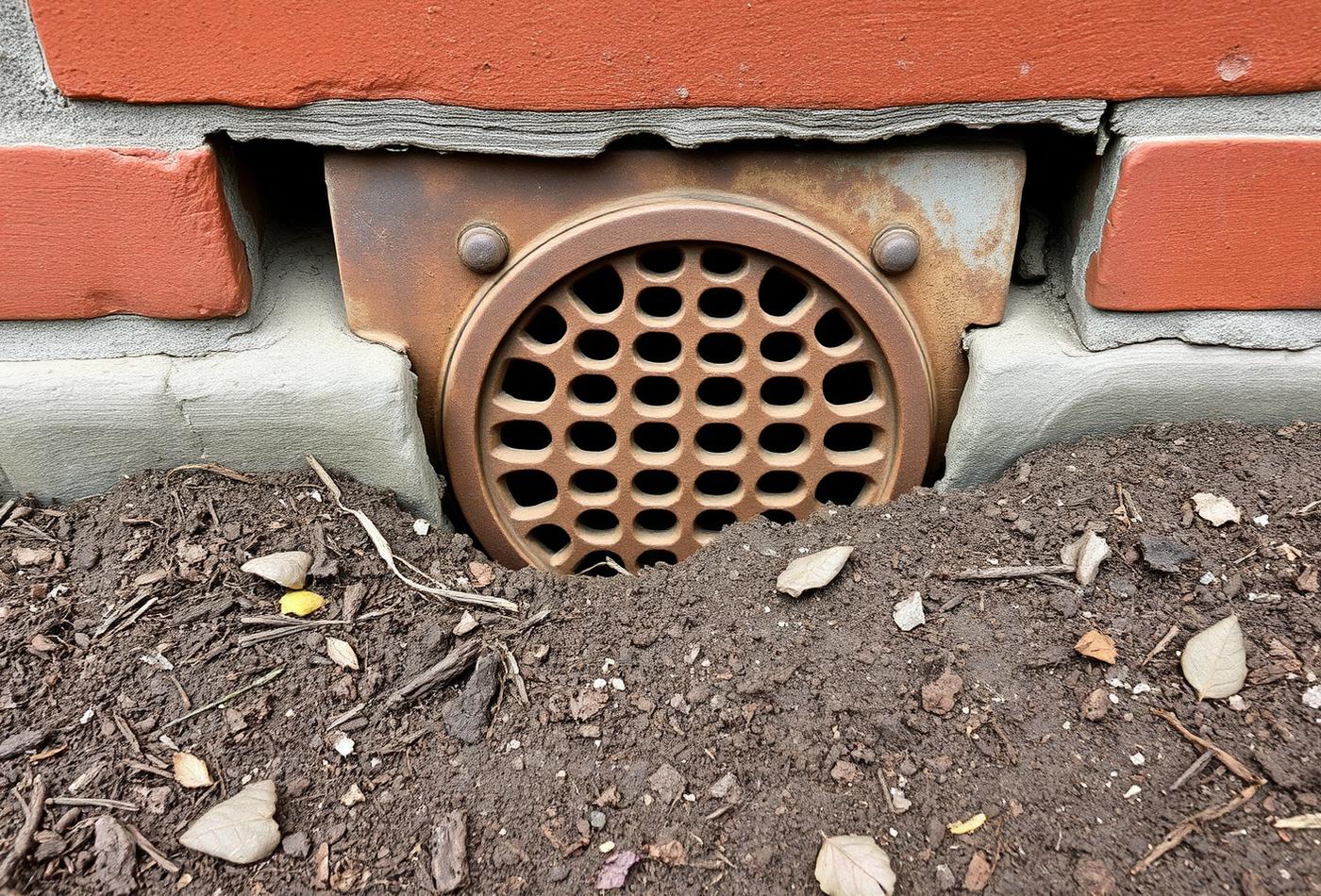
How we assess a crawl space
Our inspection method: source first, sealing second
Most failed crawl space work in Georgia comes from installing a product instead of solving a moisture path. This is the sequence we follow on every home, whether the job ends up being a vapor barrier or a full encapsulation with drainage and a dehumidifier.
- 01Find the water sourceGroundwater, surface runoff, a plumbing leak and condensation all look similar once the ground is wet. We look for the entry point before recommending anything.
- 02Check drainage and gradingGutters, downspout discharge, grade around the foundation and any existing crawl space drainage get inspected, because sealing over an active water path fails.
- 03Inspect the vapor barrier and framingWe note torn or missing barrier, wet insulation, staining on joists and subfloor, and any framing that has softened.
- 04Measure humidity and moistureRelative humidity in the crawl space and moisture readings in wood tell us whether a dehumidifier is genuinely needed or whether drainage alone solves it.
- 05Decide what the house actually needsDrainage, vapor barrier, full encapsulation, dehumidification, insulation or repair — in the order that fixes cause before symptom.
- 06Put it in writingYou get a scope and estimate that lists what is included, what is optional, and what we found. No pressure to decide during the visit.
You get a plain explanation of what we found, a written scope covering exactly what will be installed, and a recommendation based on the conditions measured in your crawl space.
Budgeting
What crawl space encapsulation costs in Georgia
Typical Georgia crawl space encapsulation project: approximately $4,000–$8,000.
Most homes fall in this range for a standard encapsulation. Add-ons such as drainage, a sump pump, a dehumidifier, or mold remediation move the total up or down based on what is actually needed.
- Basic vapor barrier / moisture-control work$1,500 – $3,500
- Standard crawl space encapsulation$4,000 – $8,000
- Encapsulation + dehumidifier$5,000 – $10,000
- Drainage / sump pump additions$1,500 – $4,500 additional
- Mold remediation when required$1,000 – $4,000+
- Large or complex crawl spaces$10,000+
Actual cost depends on crawl space size, moisture conditions, drainage, accessibility, existing damage and system requirements.
Popular next steps
- Encapsulation overviewWhat's included, start to finish
- Dehumidifier sizingWhen one is actually needed
- Drainage systemsFor water that keeps coming back
- Cost factorsWhat raises the price
Where we work
Main Georgia service areas
We also cover surrounding communities in metro Atlanta, the coastal counties near Savannah, Middle Georgia around Macon, the Augusta area and the Chattahoochee Valley around Columbus. If you're unsure whether your address is covered, send it with your estimate request.
Homeowner briefing
Reading the warning signs before it gets expensive
Inside the house
Floors that feel cool and slightly damp in summer, doors that stick seasonally, a smell that is strongest in closets and near floor registers, and higher-than-expected indoor humidity are all consistent with a wet crawl space feeding air upward.
Under the house
Look for darkened or streaked joists, sagging insulation hanging out of the bays, condensation beads on duct wrap, rust on strapping and nail plates, and plastic that has been pushed aside or never covered the full floor.
Outside
Downspouts discharging within a foot of the foundation, mulch or soil built up above the vent line, negative grade that slopes toward the house, and gutters overflowing at the corners all deliver water to the crawl space.
If the problem is water
If the problem is humidity or odor
Homeowner questions
Crawl space questions Georgia homeowners ask
Does crawl space encapsulation make sense in Georgia's climate?
In most of the state, yes. Georgia summers combine warm outdoor air with high dew points, so vented crawl spaces pull humid air across cool framing and surfaces stay damp. Sealing the ground and walls, then controlling humidity, removes that cycle. What varies is whether drainage work is needed first.
Do I need drainage, a vapor barrier, or a full encapsulation?
It depends on where the water comes from. Liquid water entering after rain calls for grading, gutter and drainage corrections. Damp soil and high humidity with no standing water is usually a vapor barrier and dehumidification problem. An inspection separates the two before anything is quoted.
How long does the work take?
A vapor barrier replacement in an accessible crawl space is often a one-day job. A full encapsulation with wall liner, sealed vents, drainage and a dehumidifier typically runs two to four working days depending on square footage, debris removal and access height.
Will encapsulation stop the musty smell in my house?
When the odor is coming from damp crawl space materials and stale air moving upward, reducing the moisture source and controlling humidity usually reduces it substantially. If the odor has another source inside the house, crawl space work alone will not resolve it, and we will say so.
Do you charge for the inspection and estimate?
The crawl space assessment and written estimate are free. You get the findings and the recommended scope in writing, and there is no obligation to book work afterwards.
Ready when you are
Tell us what's happening under your house
Send the basics and we'll arrange an inspection. You'll get findings, photos and a written scope — and a clear explanation of which part is fixing the cause and which part is protecting the space afterwards.
Free estimate request
Get a Free Crawl Space Estimate
Tell us what you're seeing under the house. We'll follow up to schedule an inspection and put a written estimate together.